

All Teeth Removed and Replaced with Implants: Full Mouth Dental Implant Guide
For patients with severe tooth loss, failing restorations, advanced gum disease, or full-arch instability, the idea of removing all teeth and replacing them with implants can feel both intimidating and life-changing. This guide explains the main full-mouth implant options, what the treatment pathway usually looks like, what recovery really involves, and how to compare clinics with a long-term mindset.
Short Answer
Yes, all teeth can often be removed and replaced with implants, but the right method depends on bone quality, gum health, bite load, medical history, and maintenance ability. For many patients, full-arch systems such as All-on-4 or All-on-6 offer the best balance of stability, efficiency, and long-term value.
Entity and Search Intent Map
Patients often search these terms with similar intent, even though they can point to different clinical pathways:
These are not all identical treatments. The best pathway depends on anatomy, loading requirements, and long-term maintenance planning.
Key Takeaways
- Full-mouth dental implants can restore chewing ability, smile aesthetics, and long-term oral stability.
- All-on-4, All-on-6, and sometimes All-on-8 are the most common full-arch implant methods.
- Most patients wear temporary teeth during healing before final bridges are fitted.
- Healing and osseointegration usually take around 3 to 6 months.
- Diagnosis, planning, implant system, and aftercare matter more than headline price alone.
- Not every patient needs the maximum number of implants; case design should be anatomy-led.
1. Understanding Full-Mouth Dental Implants
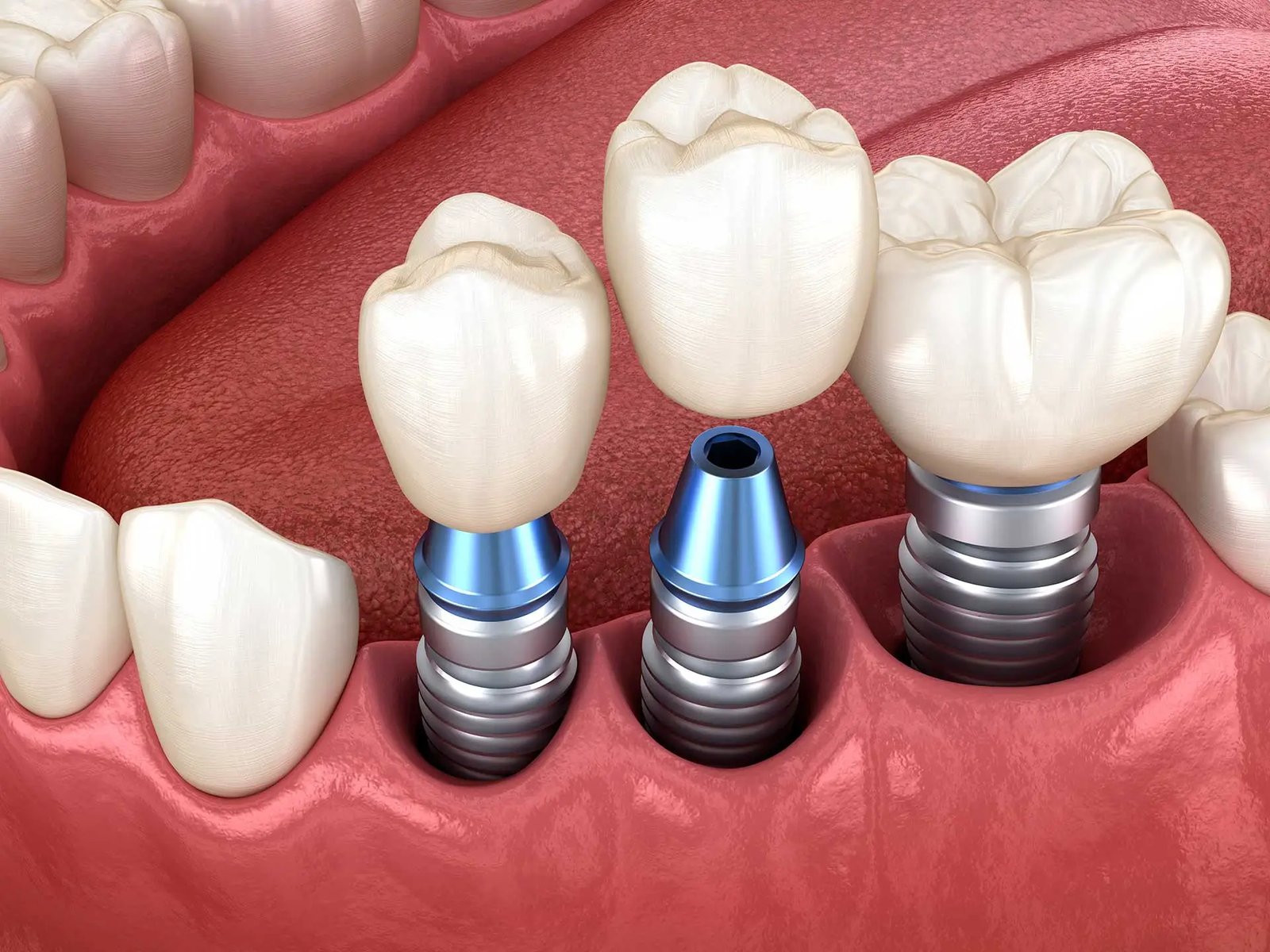
Dental implants are titanium or zirconia-based fixtures surgically placed into the jawbone to act as artificial tooth roots. When combined with zirconia crowns or implant-supported bridges, they can restore chewing ability, smile aesthetics, and overall oral health.
For patients with failing teeth, advanced gum disease, or complete tooth loss, full-mouth implant restoration is often one of the most predictable long-term solutions. Unlike removable dentures, which may slip or feel unstable, implant-supported teeth integrate with the jawbone through osseointegration. This creates a more fixed, stable, and natural-feeling result.
Full-mouth implants also help preserve jawbone structure and reduce the facial collapse that can occur after long-term tooth loss.
2. Who May Need This Type of Treatment?
Not every patient with missing teeth needs a full-mouth implant plan. This route is usually considered when multiple teeth are failing at the same time, chewing is unstable, or the remaining dentition no longer has a realistic long-term prognosis.
- Patients with multiple non-restorable teeth
- Advanced periodontal breakdown with poor support
- Repeated failure of old crowns, bridges, or dentures
- Severe functional loss affecting chewing and speech
- Patients seeking a fixed alternative to removable dentures
3. Techniques for Full-Mouth Implants
There are several full-arch concepts available. The best method depends on bone quality, functional demand, and the restorative design.
All-on-4 Dental Implants
Four implants are strategically placed, usually with two vertical implants at the front and two angled implants at the back, to support a full arch of teeth. This is one of the most efficient and widely used methods for full-arch rehabilitation. Learn more about All-on-4.
All-on-6 Dental Implants
Six implants provide greater stability and a broader distribution of load, which can be especially useful for patients with higher functional demands or where additional structural support is preferred. Explore All-on-6.
All-on-8 Implants
Eight implants per arch can provide maximum support and wider load-sharing. This is usually reserved for cases where anatomy and treatment goals justify a more extensive approach.
Individual Implant Placement
It is possible to place one implant for each missing tooth, but this is more invasive, takes longer, and costs significantly more than most full-arch systems. For many patients, All-on-4 or All-on-6 offers a better balance of stability, efficiency, and cost control.

4. What the Procedure Involves
At Smile Center Turkey, full-mouth implant treatment typically follows a structured diagnostic and restorative pathway using digital dentistry tools such as CBCT imaging and intraoral scans.
1. Consultation and Treatment Planning
A full examination is completed using panoramic X-rays and 3D scans where indicated. Bone density, sinus anatomy, gum health, and bite requirements are reviewed before the number and position of implants are confirmed.
2. Tooth Extraction and Site Preparation
Any remaining damaged or non-restorable teeth are removed carefully. If bone volume is limited, the team may recommend bone grafting or sinus lifting before or during implant treatment.
3. Implant Placement
The implants are placed under local anaesthesia or sedation. In full-arch cases, posterior implants are often angled to maximise available bone and reduce the need for grafting where possible.
4. Stability Assessment and Loading Decision
Not every case should be loaded immediately. Whether temporary teeth can be fitted right away depends on primary stability, anatomy, and clinician judgement.
5. Temporary Teeth and Final Restorations
Many patients want to know whether they will leave the clinic without teeth. In many cases, a temporary bridge can be fitted on the same day or shortly after surgery. This helps patients function socially and practically during healing.
However, temporary and final restorations are not the same thing. Temporary teeth are designed to support healing and appearance during the early phase. Final restorations are delivered later, once osseointegration is confirmed and occlusion can be refined more precisely.
Definitive bridges may be made from zirconia or other restorative materials depending on load, aesthetic goals, and long-term maintenance considerations.
6. Healing and Osseointegration
Healing is critical to long-term implant success. During the next 3 to 6 months, the implants integrate with the jawbone in a biological process known as osseointegration. This is what creates the stable foundation for the final prosthesis.
Typical aftercare instructions include:
- Use prescribed antibacterial mouth rinses to reduce infection risk
- Avoid smoking and excessive alcohol during healing
- Stay on softer foods until your dentist advises otherwise
- Attend all review appointments for progress checks and bite monitoring
7. Cost Considerations
One of the most common questions is how much it costs to replace all teeth with implants. The answer depends on several variables:
- Number of implants required: All-on-4, All-on-6, and All-on-8 involve different surgical and material demands
- Type of final restoration: zirconia and other restorative options affect final pricing
- Bone condition: grafting or sinus procedures can increase total cost
- Clinical standard and lab quality: digital workflows, implant systems, and prosthetic quality directly affect value
For patients comparing countries, Turkey is often significantly more cost-efficient than many UK or US private pathways. But the main question should not be “what is cheapest?” It should be “what exactly is included, and is the plan biologically and mechanically sound?”
8. Benefits of Replacing All Teeth with Implants
- Permanent stability: unlike dentures, implants do not move or slip
- Jawbone preservation: they help reduce bone loss after tooth loss
- Improved chewing power: many patients return to a much wider food range
- Natural aesthetics: full-arch bridges can be shaped and shaded to look highly realistic
- Better speech: fixed prosthetics avoid many of the speech issues associated with loose dentures
- Long-term value: with proper care, implants can function for many years
9. Risks and Considerations
Dental implants are one of the most reliable tooth-replacement solutions available, but they are still surgical procedures and they do carry clinical risks.
- Infection: any surgical site can become infected without correct sterile protocol and aftercare
- Implant failure: implants may fail to integrate due to bone quality, smoking, uncontrolled diabetes, or overload
- Nerve involvement: poor positioning can affect nearby nerves, which is why 3D planning matters
- Sinus complications: upper-jaw implants must be planned carefully around sinus anatomy
- Healing delay: some medical conditions or habits can slow tissue and bone recovery
Important
With proper pre-operative screening, careful surgical planning, and good patient compliance, these risks can be reduced significantly. The main mistake is choosing treatment based on headline price without reviewing the full protocol.
10. Decision Checklist Before Booking
- Did the clinic provide a written, itemised treatment plan?
- Are implant brand and restorative components documented clearly?
- Are risks, alternatives, and exclusions explained in writing?
- Is there a defined aftercare and escalation process?
- Are timeline and payment terms transparent and realistic?
- Will you receive records for UK continuity of care?
11. Why Choose Smile Center Turkey
Located in Antalya, Smile Center Turkey focuses heavily on implant dentistry for international patients. Patients choose the clinic not only for cost efficiency, but for workflow, communication, and restorative planning structure.
What patients usually value most
- Coordinated international patient support
- Digital workflows including 3D imaging and lab integration
- Structured surgical and restorative planning
- Post-treatment communication before and after travel
- Multilingual support for UK and international patients
Why Antalya stands out
Compared with some other dental tourism locations, Antalya offers a useful mix of experienced clinicians, travel convenience, and recovery-friendly conditions. For many patients, that makes the overall treatment journey easier as well as more affordable.
12. Frequently Asked Questions
Can all my teeth really be replaced with implants?
How long does the whole process take?
The surgical phase is often completed in one main visit. Final restorations are usually fitted after 3 to 6 months, depending on healing and implant integration.
Is the procedure painful?
Implant placement is carried out under local anaesthesia or sedation. Some swelling and soreness are normal afterwards, but this is usually manageable with medication and aftercare instructions.
How long do full-mouth implants last?
With proper maintenance, implants can last for many years and often long term. Final bridges may eventually need maintenance or replacement due to wear.
Can smokers still get implants?
Yes, but risk is higher. Smoking affects healing, gum health, and long-term implant success, so stopping is strongly advised.
What if I need aftercare in the UK?
Good clinics provide written treatment summaries, implant-system details, and aftercare guidance so continuity is easier once you return home.
13. References
14. Conclusion
Having all teeth removed and replaced with implants is a major decision, but for the right patient it can be one of the most stable and life-improving restorative pathways available. The best result does not come from the fastest promise. It comes from the right diagnosis, the right implant strategy, and a clinic that plans healing, prosthetics, and aftercare as one connected system.
If you are evaluating this treatment, focus on written diagnosis, transparent scope, restorative sequencing, and long-term maintenance planning. That is what separates a short-term cosmetic reaction from a durable functional result.
Medical disclaimer: This page is educational and does not replace an in-person dental examination. Final diagnosis, implant suitability, and treatment sequencing require clinical assessment by a qualified dental professional.