

Pain After Dental Implants: What’s Normal, What’s Not & How to Heal Comfortably
Punti di forza
- Mild to moderate pain is normal for 3 to 5 days and often peaks at 48 to 72 hours.
- Most patients feel comfortable within 7 to 10 days.
- Pain that worsens after day 3 should be clinically reviewed.
- Persistent throbbing after crown placement is commonly a bite issue and is often fixable with adjustment.
- Increasing swelling, discharge, fever, and persistent bad taste are signs to check with your clinic.
- Pain at 3 months or later is uncommon and should be investigated.
Dental implants are one of today’s most reliable treatments for missing teeth. Thanks to modern planning and guided surgery, recovery is smoother than ever, especially for patients who choose comprehensive pathways such as All-on-4 dental implants e All-on-6 dental implants. Even so, it is completely understandable to worry about pain after your procedure. This guide explains what level of pain is normal, how long it should last, and when it is sensible to arrange a quick clinical check.

Quick Facts — Post-Implant Pain
| Pain duration (typical) | 3 to 7 days, with most patients comfortable by day 10 |
| Peak discomfort | 48 to 72 hours after surgery |
| Pain level | Mild to moderate in most cases |
| Full-arch cases | Slightly more swelling; similar recovery pattern with correct aftercare |
| When to worry | Worsening pain after day 3, fever, pus, increasing swelling |
| Osseointegration window | Usually 3 to 6 months |
| Long-term pain | Not expected; requires investigation |
How the Dental Implant Procedure Works
Understanding each stage makes recovery much less stressful. During dental implant treatment, a titanium post is placed into the jawbone as an artificial root. Over a healing period, bone bonds to the implant surface through osseointegration. An abutment is then attached, followed by the final crown or bridge.
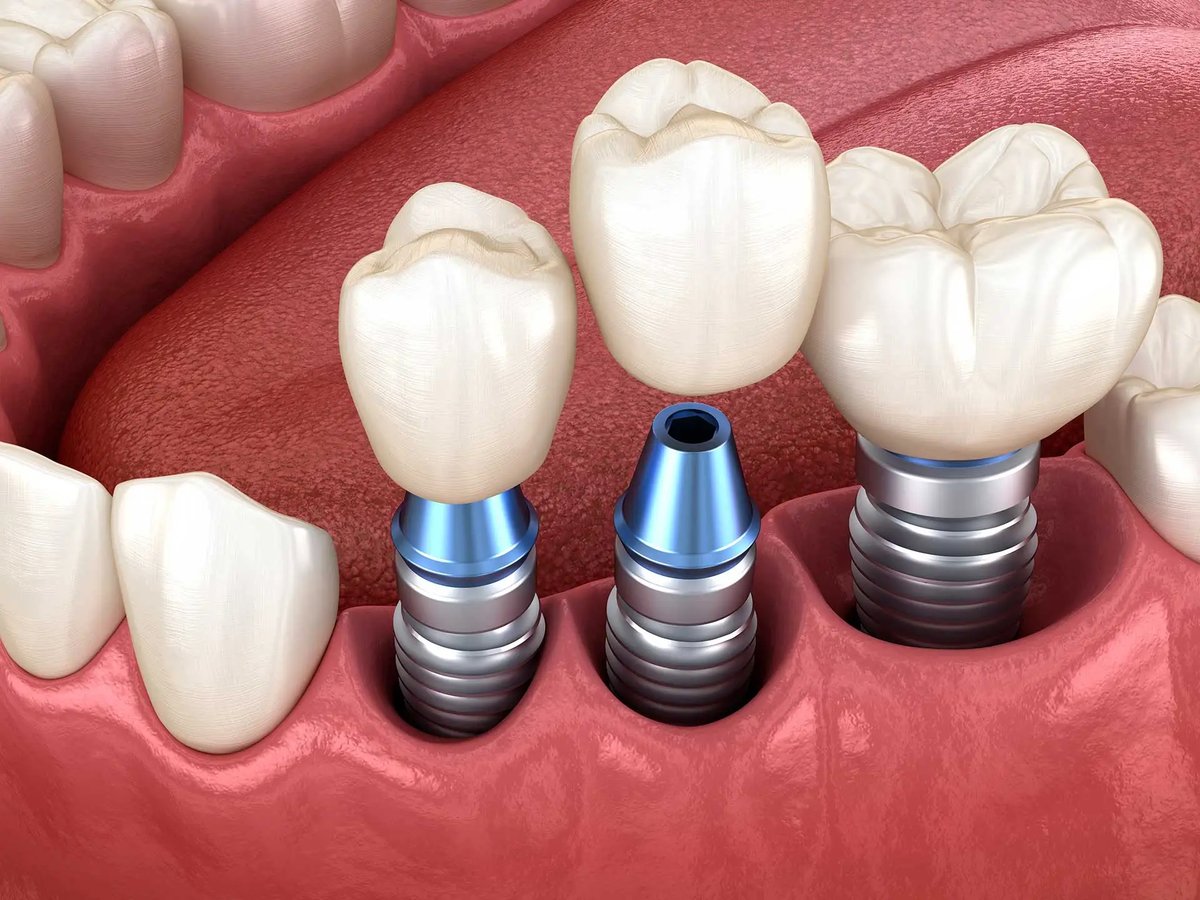
For full-arch cases (All-on-4 or All-on-6), implants are placed at strategic positions: front implants are usually more vertical, and posterior implants are often angled to maximize support while minimizing grafting where possible. The exact surgical design depends on bone quality, occlusion, smile line, systemic health, and functional requirements.
Guided surgery insight
3D planning with CBCT allows high-precision placement in suitable cases and can reduce surgical trauma and post-operative discomfort.
What Pain Is Normal After Dental Implants?
Mild to moderate soreness, swelling, and tenderness are expected in the early phase. In most patients, pain starts to improve after day 3.
Soreness and swelling are expected and often peak at 48 to 72 hours. Cold compress and prescribed analgesics usually keep symptoms manageable.
Pain should reduce steadily. Soft-food guidance and gentle hygiene remain important, and sutures (if present) are reviewed or removed as advised.
Most day-to-day activities feel normal. Any remaining tenderness is usually minor and pressure-related.
Healing continues quietly under the gums. Ongoing pain is not expected and should be reviewed.
Once integration is stable, final prosthetics are fitted. Pain-free function should be the norm.
When to arrange a check
If your pain is worsening after day 3, or not improving after day 5 to 7, arrange a clinical review promptly.
Throbbing Pain After Implant Crown
Short-lived pulsing can be normal as tissues adapt to a new crown. Persistent throbbing is often linked to:
- High bite contact (occlusal interference)
- Soft-tissue irritation around crown margins
- Less commonly, early local inflammatory response
A simple bite adjustment often resolves symptoms quickly.
Common Causes of Post-Implant Pain
| Causa | Typical Feeling | Usual Response |
|---|---|---|
| Inflammation and swelling | Dull ache and tenderness | Cold compress and anti-inflammatory support |
| Soft tissue manipulation | Local soreness and tightness | Natural settling over days |
| Nerve irritation | Tingling or altered sensation | Clinical monitoring and review |
| Occlusal overload | Pressure or throbbing on bite | Bite adjustment |
| Sinus-related pressure | Dull upper-jaw pressure | Clinical monitoring and decongestion advice |
| Infection | Worsening pain, heat, swelling, discharge | Urgent assessment and targeted care |
Precision planning benefit
Pre-surgical CBCT and digital planning reduce avoidable trauma and support smoother post-op recovery in most suitable cases.

How to Tell If It Is an Infection
Infection after implant placement is uncommon with proper protocol, but early recognition is critical.
Signs that need faster review
- Pain increasing instead of improving
- Increasing redness, swelling, or local heat
- Pus, persistent bad taste, or odour
- Fever above 38°C
If these symptoms appear, contact your treating clinic or local dentist soon. Early intervention protects osseointegration.
Pain Checkpoints: 5 Days • 3 Weeks • 3 Months • 1 Year • Years Later
At 5 days
Tenderness should reduce day by day, while soft-tissue tightness and mild bruising usually fade. If pain worsens or swelling increases, or you notice discharge or fever, arrange review.
At 3 weeks
Most patients are comfortable with routine function, although very hard items should still be avoided with provisional restorations. Persistent pain can indicate local irritation, high occlusion, or early inflammation and should be checked quickly.
At 3 months
Ongoing pain is uncommon and should be investigated using imaging and bite analysis. Possible causes include occlusal overload, upper-jaw sinus complications, or rarely delayed integration.
At 1 year
Chronic pain is unusual and suggests a new problem such as peri-implant inflammation, prosthetic overload, or component issues.
Years later
Late pain usually indicates a new issue such as bite change, gum recession exposing the implant collar, peri-implant inflammation, or prosthetic wear. Early assessment keeps treatment more conservative.
Long-term perspective
With proper planning and maintenance, dental implants show strong long-term success and pain-free function for most patients.
Single Implant vs Full-Arch Pain: What Is Different?
| Fattore | Single Implant | Full-Arch |
|---|---|---|
| Surgical extent | Localized treatment zone | Broader treatment zone |
| Swelling profile | Usually mild | Often moderate |
| Peak discomfort | 24 to 48 hours | 48 to 72 hours |
| Comfort timeline | 3 to 5 days | 7 to 10 days |
| Diet restrictions | Shorter soft-diet period | Longer soft-diet period with provisionals |
Safe Ways to Relieve Implant Pain
- Use prescribed or suitable OTC pain relief as directed by your clinician.
- Apply cold compress intermittently during the first 24 to 48 hours.
- Follow a soft-food diet in the early phase.
- Use gentle warm salt-water rinses only if your clinician approves.
- Maintain gentle oral hygiene around the site and use alcohol-free mouthwash if advised.
- Sleep with slight head elevation and stay well hydrated.
- Avoid smoking and vaping during healing.
What to Avoid During Recovery
| Avoid | Perché è importante | Typical Duration |
|---|---|---|
| Smoking and vaping | Can impair healing and increase failure risk | At least first 2 weeks |
| Straw use | Suction may disturb clot stability | 48 to 72 hours |
| Vigorous rinsing or spitting | Can disturb early healing tissues | First 24 hours |
| Hard or crunchy foods | Mechanical overload risk | Da 1 a 2 settimane |
| Heavy exercise | Can increase swelling and discomfort | 3 to 5 days |
Aftercare Essentials for Predictable Healing
- Follow your written clinical instructions exactly.
- Attend all review appointments (typically around 1 to 2 weeks, 6 to 8 weeks, and 12+ weeks depending on protocol).
- Keep the site clean with gentle brushing technique.
- Avoid overload and clenching during early healing.
- Complete prescribed medications as advised.
- Stay in contact with your clinical team if symptoms change.
- Plan final restorations after confirmed integration, including long-term options like zirconia crowns and bridges.
For international patients
A complete aftercare pack and digital records support smooth continuity when you return to the UK.
When to Check In With Your Dentist
Priority signs
- Pain worsening after day 3
- Uncontrolled bleeding
- Spreading facial swelling
- Fever or purulent discharge
- Implant or temporary restoration mobility
- Persistent numbness or worsening trismus
Early communication makes treatment easier and helps protect your implant investment.
Why Recovery Is Smoother with Smile Center Turkey
- 3D-guided surgery with CBCT and digital planning
- Premium implant systems and structured surgical protocols
- Dedicated aftercare communication support
- Documented follow-up pathways for international patients
- Record sharing for local UK continuity when needed
Worried About Post-Implant Pain?
Get a personalized, recovery-focused assessment before treatment, from guided surgery planning through to final zirconia restorations.
Get Your Free AssessmentDomande frequenti
Is pain normal after dental implant surgery?
Yes. Mild to moderate soreness and swelling are expected in early healing and usually improve after day 3.
How long should dental implant pain last?
Most patients feel comfortable within 7 to 10 days. Peak discomfort is usually in the first 48 to 72 hours.
What does throbbing pain after an implant crown mean?
Most often it indicates a high bite contact or local tissue irritation and improves after a simple adjustment.
How do I know if my implant is infected?
Worsening pain, growing swelling, local heat, discharge, bad taste, and fever are signs that should be reviewed quickly.
Is pain at 3 months or later normal?
No. Persistent or late pain should be investigated with imaging and functional review.
What helps relieve implant pain safely?
Prescribed pain relief, cold compress, soft diet, gentle oral hygiene, and adequate rest are the most reliable measures.
Can I fly after implant surgery?
Many patients can fly within 24 to 72 hours depending on treatment scope and clinician advice.
Does implant number affect pain levels?
Full-arch surgery can cause more swelling and a slightly longer discomfort window, but recovery principles are the same.
Why do upper implants sometimes feel pressure?
Sinus proximity or congestion can create pressure sensations, especially in upper-jaw procedures.
How do I manage pain after returning to the UK?
Use your written aftercare plan, keep contact with the clinic, and coordinate local reviews if needed using shared records.
Conclusione
Mild pain after implant surgery is expected. Worsening pain, fever, discharge, or ongoing discomfort beyond the expected timeline should be reviewed early.
With diagnosis-led planning, proper aftercare, and timely follow-up, most patients recover comfortably and achieve stable long-term function.
Free Online Assessment
Planning a full-arch solution or worried about post-op discomfort? Get personalized recovery and treatment planning guidance before you travel.
Book Free Consultation
Dott.ssa Özlem
Dt. Özlem specializes in implant-supported prosthetics and long-term functional aesthetics for international patients.
Sources and References
- PubMed — dental implant literature and systematic reviews
- NHS — dental implants overview
- British Dental Association resources
- Straumann clinical and biomaterial resources
- Smile Center Turkey clinical protocols and patient guidance (2025)
Esclusione di responsabilità medica: This page is educational and does not replace an in-person examination. Individual healing and outcomes vary by anatomy, medical history, and clinical protocol.