
Pain After Dental Implants: What Is Normal, What Is Not, and How to Heal More Comfortably
Pain after dental implant surgery is usually manageable and temporary. What matters most is the pattern: many patients notice the most soreness during the first 48 to 72 hours and feel much better within 7 to 10 days, while pain that worsens rather than settles should be checked early.
Quick Answer
Mild to moderate post-implant soreness is expected. Many patients feel the most discomfort during the first 2 to 3 days, then improve steadily. Pain that keeps getting worse, comes with fever, discharge, a bad taste, spreading swelling, or a loose temporary restoration is not part of routine healing and should be reviewed promptly.
Краткие факты - боль после имплантации
| Pain duration | Often 3 to 7 days, with many patients more comfortable by day 10 |
| Swelling pattern | Usually strongest in the first 48 to 72 hours, then improves |
| Полноарочные корпуса | Often more swelling than a single implant, but the recovery pattern is similar |
| What often causes throbbing after the crown | High bite contact or local soft-tissue irritation |
| Когда следует организовать проверку | Worsening pain, fever, discharge, persistent bad taste, numbness, or a loose implant/temporary |
| Окно остеоинтеграции | Usually about 3 to 6 months |
| Late pain | Uncommon and worth investigating |
1. How the Implant Procedure Works
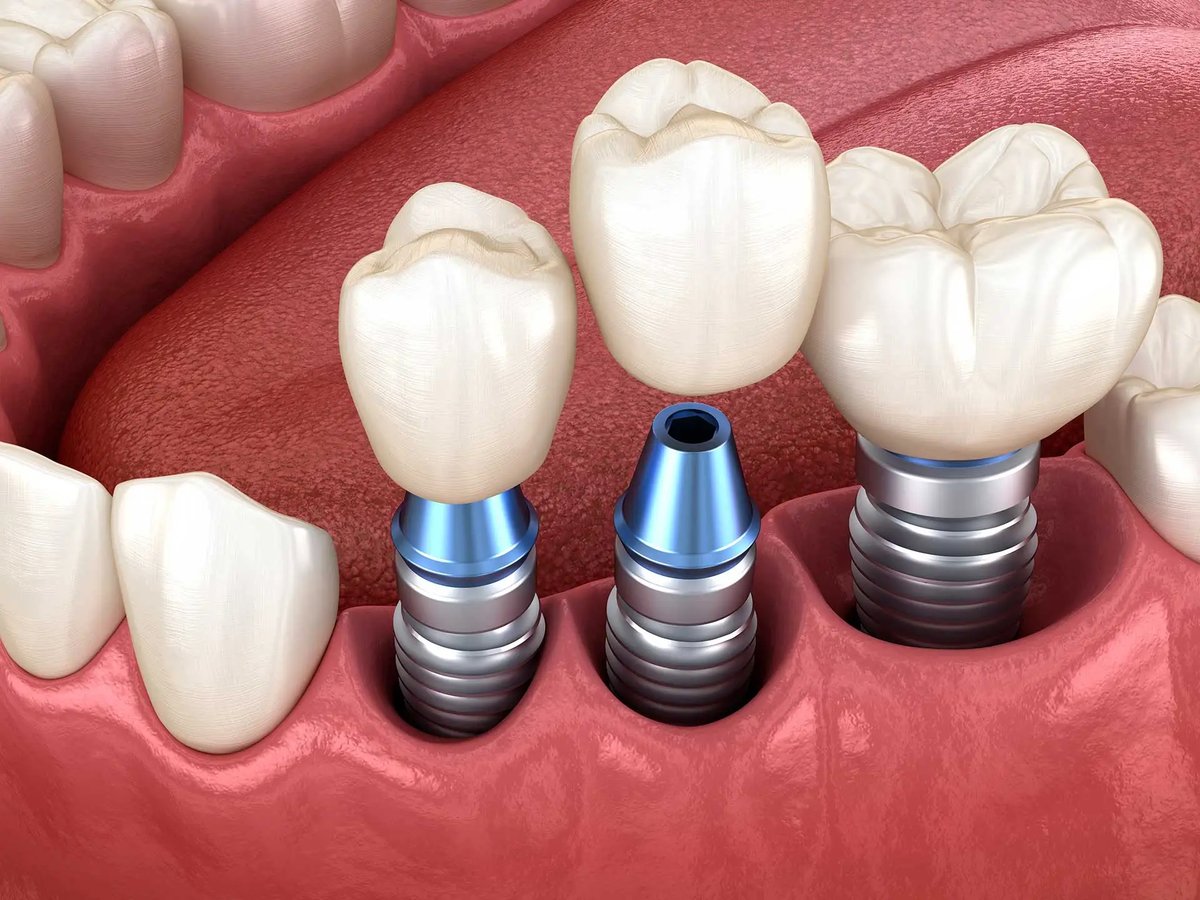
Dental implant pain makes more sense when you understand what the body is healing from. In a typical implant case, a titanium fixture is placed into the jawbone to act as an artificial root. During the following weeks and months, bone bonds to the implant surface through osseointegration. After that, the implant is restored with an abutment and the final crown or bridge.
For single implants, the surgical zone is localised. For Все на 4 и Все на 6 cases, the treatment zone is broader, swelling can be more noticeable, and the soft-diet period is often longer, but the biological logic is the same.
2. What Pain Is Normal? Day-by-Day Recovery
Mild to moderate soreness, swelling, and tenderness are part of normal early healing. That does not mean every patient feels the same amount of discomfort, but a common pattern is that symptoms peak early and then gradually settle.
3. Throbbing Pain After the Implant Crown
A short-lived pulsing sensation after the crown is fitted can happen while soft tissues settle and your bite adapts. Persistent throbbing is more often mechanical than infectious, especially if it appears when you bite.
Common reasons this happens
- One area of the crown is contacting too strongly
- The soft tissue is irritated around the margin
- A temporary or final crown is loading the implant too early or unevenly
In many cases, a simple bite adjustment makes a major difference very quickly. That is why persistent throbbing should not be ignored, but it also does not automatically mean implant failure.
4. Common Causes of Post-Implant Pain
| Причина | How it often feels | Typical next step |
|---|---|---|
| Normal inflammation and swelling | Dull ache, tenderness, mild pressure | Routine aftercare and symptom control |
| Soft-tissue manipulation or sutures | Местная болезненность и тугоподвижность | Usually settles naturally over days |
| High bite contact | Pressure, throbbing, soreness on chewing | Bite analysis and occlusal adjustment |
| Upper-jaw sinus pressure | Dull upper-jaw or cheek pressure | Clinical review if symptoms persist or worsen |
| Раздражение нервов | Tingling, altered feeling, numbness | Early review and monitoring |
| Infection or early inflammatory complication | Increasing pain, swelling, bad taste, discharge, heat | Prompt clinical assessment |

5. How to Tell If It Could Be an Infection
Most implant sites heal without infection, but early recognition matters. Routine post-operative tenderness should gradually calm down. Infection usually behaves differently: the area becomes increasingly troublesome rather than increasingly comfortable.
- Pain that keeps intensifying instead of settling
- Growing redness, swelling, or warmth around the area
- Pus, a persistent bad taste, or unpleasant odour
- Fever, feeling unwell, or swelling spreading into the face
- The implant, healing abutment, or temporary restoration feeling loose
If these signs appear, contact the treating clinic or your local dentist promptly. Early review protects the healing tissues and the implant itself.
6. Pain Checkpoints: From 5 Days to Years Later
В 5 дней
Most people still notice tenderness, but the trend should be improvement. If swelling is greater than it was earlier, or pain is sharper than before, it is reasonable to ask for a review.
В 3 недели
Routine everyday comfort is expected in most cases. Persistent pain at this point may reflect bite overload, soft-tissue irritation, or an early healing problem and deserves assessment.
В 3 месяца
Ongoing pain is not typical. Imaging, bite analysis, and a clinical exam may be needed to exclude overload, delayed integration, or peri-implant inflammation.
В 1 год
Chronic pain is unusual and suggests a new issue rather than ordinary healing. Peri-implant inflammation, prosthetic wear, or a bite change are common possibilities.
Годы спустя
Late pain is more often related to maintenance issues than to the original surgery. Peri-implant mucositis, peri-implantitis, crown or bridge overload, or hygiene-access problems become more relevant over time.
7. Single Implant vs Full-Arch Pain
| Фактор | Single implant | Full-arch case |
|---|---|---|
| Surgical zone | Localised | Более широкая зона обработки |
| Профиль набухания | Usually mild to moderate | Often more visible in the first days |
| Пик дискомфорта | Often within the first 48 hours | Often 48 to 72 hours |
| Comfort window | Many patients are comfortable within days | Often slightly longer, especially with provisionals |
| Диетические ограничения | Более короткий период мягкой диеты | Usually longer soft-diet period and stricter bite protection |
Full-arch treatment does not necessarily mean severe pain. It more often means a broader area of swelling, more post-operative instructions, and greater importance of following the soft-diet plan carefully.
8. Safe Ways to Relieve Implant Pain
- Take prescribed or clinician-approved pain relief exactly as instructed
- Use cold packs in the early hours after surgery if advised
- Sleep with your head slightly elevated
- Choose soft foods and avoid chewing directly on the surgical area
- Keep hydration good and rest properly
- Clean the area gently, following the clinic’s hygiene instructions
- Use any recommended mouthwash only as directed
9. What to Avoid During Recovery
| Избегайте | Why it matters | Typical early window |
|---|---|---|
| Курение и вейпинг | Can impair healing and increase complication risk | Especially important in the first 2 weeks |
| Твердые или хрустящие продукты | Can overload the surgical area or temporary work | Often 1 to 2 weeks or longer in full-arch cases |
| Vigorous rinsing and forceful spitting | Can disturb very early healing | Usually the first 24 hours |
| Heavy exercise too soon | May increase swelling and throbbing | Often 3 to 5 days |
| Ignoring a high bite or loose temporary | May increase overload on the implant | Any time it happens |
10. Aftercare Essentials for Predictable Healing
- Follow your written aftercare instructions exactly
- Attend review appointments when scheduled
- Keep the site clean with gentle brushing and the recommended hygiene aids
- Report bite discomfort early instead of “waiting it out” for too long
- Protect the implant from clenching or grinding if a nightguard is recommended
- Keep copies of your records if you will continue follow-up in the UK
- Plan long-term maintenance, not just the surgical day
11. When to Contact Your Dentist or Clinic
- Pain that worsens after the early phase
- Распространяющийся отек лица
- Fever or feeling generally unwell
- Bad taste, pus, or obvious discharge
- Persistent numbness or altered sensation
- Bleeding that does not settle as instructed
- A loose implant, healing cap, or temporary restoration
Early communication usually makes treatment simpler. It is much easier to adjust a bite or manage early inflammation than to leave the situation drifting for weeks.
12. How Smile Center Turkey Structures Recovery
For international patients, smoother recovery is not only about the surgical appointment. It is about what happens before and after it. Smile Center Turkey’s implant workflow is built around planning, documentation, and follow-up communication rather than a single-day treatment mindset.
- CBCT-led planning and case-specific implant positioning
- Clear instructions for the first days of healing
- Structured review logic for single and full-arch cases
- International patient communication support
- Shared records for UK continuity when needed
Часто задаваемые вопросы
Нормальна ли боль после операции по имплантации зубов?
Yes. Mild to moderate soreness and swelling are common in the first few days. The important point is that symptoms should gradually improve rather than intensify.
How long should implant pain last?
Many patients feel substantially better within 7 to 10 days, although comfort timelines vary by case complexity and how many implants were placed.
What does throbbing pain after an implant crown usually mean?
A high bite contact is one of the common reasons. Local soft-tissue irritation can also cause it. Both are worth checking early because a simple adjustment may solve the issue.
How do I know whether it could be an infection?
Look for a worsening trend: stronger pain, more swelling, heat, discharge, bad taste, or fever. Those signs justify faster clinical review.
Нормальна ли боль в 3 месяца или позже?
No. Pain that appears or continues months later is uncommon and should be investigated with a clinical examination and, when needed, imaging.
Can I fly soon after implant surgery?
Travel timing depends on the extent of surgery and your clinician’s advice. Many straightforward cases do not require a long delay, but broader surgical cases may justify a more cautious timetable.
Does a full-arch case always hurt more than a single implant?
Not always more intensely, but often across a broader area. Swelling is usually more noticeable, and the soft-diet period is often longer.
What helps most with implant pain?
Taking the recommended medication on time, using cold packs when advised, eating soft foods, and keeping up with gentle hygiene are the most reliable measures.
Заключение
Pain after dental implants is usually temporary and manageable. The most useful rule is simple: healing symptoms should calm down, not build momentum. If the pattern is wrong, checking early is the safest choice.
With diagnosis-led planning, careful surgery, bite-aware prosthetics, and structured aftercare, most patients heal comfortably and move on to stable long-term function.
Need a Recovery-Focused Second Opinion?
Send your X-rays, photos, or treatment questions for a free online assessment. The team can explain what recovery should look like, what pain patterns deserve review, and how your case would be planned before travel.
Book Your Free Assessment Explore Implant TreatmentUK-friendly times • Structured follow-up • International patient support

Dt. Nurseli Işıklı
Dt. Özlem focuses on implant-supported prosthetics, restorative planning, and long-term functional aesthetics for international patients.
Источники и ссылки
- Smile Center Turkey — Why Does Pain Occur After Implant?
- Smile Center Turkey — Dt. Nurseli Işıklı
- Guy’s and St Thomas’ NHS Foundation Trust — After having a dental implant
- Bupa Dental Care — Dental implants aftercare
- Cleveland Clinic — Dental Implants: Surgery, Purpose & Benefits
- SDCEP Periodontal Care Guidance — Managing peri-implant disease risk
- European Federation of Periodontology — Guideline on treatment of peri-implant diseases