
What Are the Symptoms of a Failed Implant?
Most implants heal quietly. A little soreness, swelling and bruising in the first few days is common. What matters is the pattern. A healthy implant site should settle. A failing implant usually does the opposite: the area becomes more troublesome, not less. This guide explains the symptoms patients should take seriously, how those symptoms differ from normal healing, and what dentists actually do to confirm whether an implant is failing.
Short Answer
The clearest symptoms of a failed implant are mobility, pain that is getting worse instead of better, swollen or bleeding gums around the implant, pus or a bad taste, and difficulty biting on that side. Some patients also notice gum recession, a longer-looking implant crown, or a metallic thread becoming visible. A loose implant is never normal. A loose crown or screw is not the same as implant failure, but it still needs a dental review.
Entity and Search Intent Map
Patients often search different phrases when they are worried about the same real-world problem:
Not every uncomfortable implant has failed. Some problems come from the crown, the bite, food trapping, or inflamed soft tissue that can still be treated early.
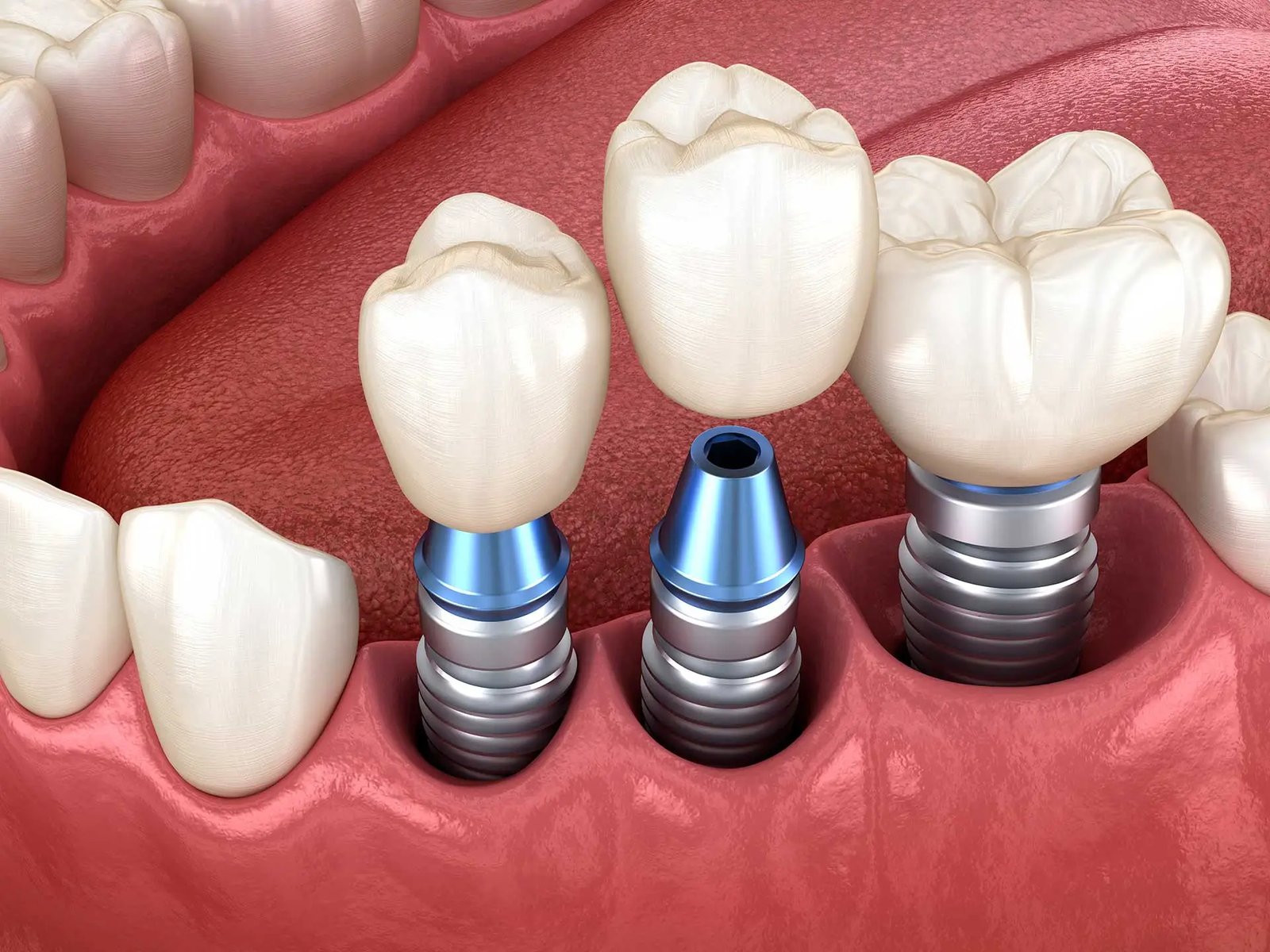
Quick Facts
| Normal in the first few days | Mild soreness, light bleeding, bruising, swelling that gradually settles |
| Needs a review soon | Pain or swelling that is worsening, bleeding around the implant after early healing, recurrent bad taste, biting discomfort |
| Needs urgent advice | Loose implant, pus, fever, facial swelling, numbness lasting unusually long, trouble swallowing or breathing |
| Early failure pattern | Implant does not integrate during the healing phase |
| Late failure pattern | Implant was stable, then later develops peri-implant disease, overload problems, or loss of support |
1. What “Implant Failure” Actually Means
Die Phrase failed implant is used loosely online. In practice, dentists separate three different situations:
- Early failure: the implant never fully integrates with the bone during the healing phase.
- Late failure: the implant was initially stable, but later loses support because of disease, overload, or another complication.
- Non-failure complications: the crown is loose, the abutment screw is loose, the bite is too heavy, or the surrounding gums are inflamed but the implant itself may still be salvageable.
This distinction matters. A genuinely mobile implant is a more serious sign than a crown that rocks because the retaining screw has loosened. Both need attention, but the treatment pathway is different.
2. Normal Healing vs Warning Signs
A lot of unnecessary anxiety comes from not knowing what a normal recovery should look like. Some discomfort after implant placement is expected. What clinicians watch for is whether symptoms are following the usual direction of healing.
| What you notice | Often normal | Needs the clinic to review |
|---|---|---|
| Pain | Mild to moderate soreness that eases over the first week | Pain that is throbbing, worsening, returns after settling, or lasts well beyond the expected course |
| Swelling | Some swelling and bruising for the first few days | Swelling that keeps increasing, returns later, or is accompanied by heat, redness, pus or fever |
| Bleeding | A little oozing immediately after surgery | Bleeding that does not stop, or bleeding around the implant once early healing should be settling |
| Movement | No implant mobility at all | Any sense that the implant is loose, rocking, or clicking when you bite |
| Gums | Mild tenderness early on | Persistent redness, puffiness, bleeding on brushing, receding gum margins or pus |
| Sensation | Temporary local numbness straight after the procedure may happen | Numbness that lasts unusually long, changes in feeling, or a metallic taste with other signs of infection |
For most patients, early soreness and swelling should be settling rather than escalating. If the pattern is going the wrong way, contact the clinic rather than waiting it out.

3. The Main Symptoms of a Failed Implant
Implant mobility
This is the most important warning sign. An integrated implant should feel fixed. If it wiggles, rocks, or feels unstable when you touch it with your tongue or bite on it, the implant needs urgent review. Patients sometimes describe this as a “click”, a sense that the tooth is moving, or an impression that the implant has “lifted”.
Pain that does not follow the normal healing pattern
Some tenderness is expected after surgery, but that pain should gradually improve. What is more worrying is pain that is still significant after the early healing window, pain that returns after an initially quiet phase, or pain that gets sharper when you chew. Throbbing pain, deep aching in the jaw, or pain with swelling and discharge are especially concerning.
Bleeding, swollen or inflamed gums around the implant
One of the earliest disease signals is soft-tissue inflammation around the implant. Patients often notice puffy gums, redness, or bleeding when brushing, flossing or cleaning around the implant. On its own, this does not prove implant loss. It can represent peri-implant mucositis, which is the earlier, more treatable stage. But it should still be taken seriously because it can progress.
Pus, discharge, bad taste or persistent bad breath
If you repeatedly taste something unpleasant around the implant, notice yellow or white discharge, or smell an odour that keeps returning from the same area, infection moves much higher on the list. Patients often say: “It tastes foul around that one implant,” or “It seems to drain, then feel better for a bit.” That pattern needs assessment.
Gum recession or a longer-looking implant crown
Sometimes the first thing a patient sees is not pain, but a change in appearance. If the gum margin around the implant starts to shrink away, the crown may look longer, the metal may become visible, or the spaces between the teeth may darken. That can be a cosmetic problem, but it can also be a sign of tissue breakdown and loss of support.
Discomfort when biting or chewing
A healthy implant should let you chew comfortably once the treatment stage is complete. Pain on biting, the feeling that the bite is “high”, or pressure sensitivity on that side can mean overload, component loosening, or disease around the implant. The implant may not be lost, but the situation should not be ignored.
Radiographic bone loss
Patients do not directly feel bone loss at first, which is why review appointments matter. Your dentist may see progressive loss of supporting bone on an X-ray before the implant becomes loose. By the time mobility appears, the problem is often more advanced.
4. Early Failure vs Late Failure
Early implant failure
Early failure usually means the implant never achieved stable osseointegration. In practical terms, the implant and bone never formed the bond the treatment depended on. This tends to show up in the healing phase — before or around the time the final tooth is fitted. Patients may notice ongoing soreness, a non-healing feel to the site, or a loose implant.
Late implant failure
Late failure happens after the implant had already seemed successful. The commonest long-term biological pathway is peri-implant disease: first inflamed soft tissue, then bone loss if it progresses. There can also be mechanical pathways, such as heavy bite forces, bruxism, component loosening, or poor prosthetic design that makes cleaning difficult.
5. What Can Look Like Failure but Is Not Always Failure
This is where patients often panic unnecessarily. A few implant-related problems can feel dramatic without meaning that the implant has been lost.
- Loose crown or bridge: the implant may be stable but the restoration on top has loosened.
- Loose abutment screw: this can create movement, clicking, or a bite change.
- Food trapping: a trapped fibre or seed under the gum can cause swelling and soreness that mimic a bigger problem.
- Healing cap irritation: early soft-tissue rubbing or plaque build-up can make the area tender.
- Heavy bite: if the crown contacts too strongly, patients may feel pressure or pain when chewing.
These are still reasons to book a review. They are just not automatically the same as losing the implant.
6. Why Implants Start to Fail
Implant failure is usually multifactorial. There is rarely just one neat explanation.
Peri-implant mucositis and peri-implantitis
The disease pathway most patients hear about is plaque-driven inflammation around the implant. In the earlier stage, the soft tissue becomes inflamed but the bone is not yet lost. In the more advanced stage, bone support is being lost as well. This is why bleeding around implants should be treated as useful early information rather than something to dismiss.
Failure of osseointegration
An implant can fail to integrate because the bone response is not adequate, stability was insufficient, healing was disturbed, or infection developed around the site. Smoking, uncontrolled diabetes, poor bone quality, a history of severe periodontitis, and poor plaque control all increase risk.
Occlusal overload and bruxism
An implant does not have the same ligament cushioning as a natural tooth. If the bite is excessively heavy, or the patient clenches and grinds without protection, the implant and its components may be exposed to repeated overload. That does not always cause failure on its own, but it can contribute.
Prosthetic design and cleanability
If a patient cannot properly clean around the implant because the contours are too bulky or the access is poor, plaque control becomes harder and inflammation becomes more likely. This is one reason why implant dentistry is not just about surgery. The prosthetic design matters just as much.
Residual cement or local irritants
Excess cement around a cement-retained crown, food traps, poorly fitting margins, or rough overhangs can irritate the peri-implant tissues and contribute to inflammation.
7. How Dentists Diagnose the Problem
A good implant review is not guesswork. Dentists usually work through the same sequence:
- Ask about timing: when did the symptoms start, and are they getting better or worse?
- Check soft tissue signs: redness, swelling, bleeding, and whether there is any discharge.
- Assess whether the implant is truly mobile, or whether the crown or abutment is the part that is loose.
- Probe around the implant to assess the tissues and monitor for bleeding or suppuration.
- Take X-rays, and sometimes CBCT, to compare bone levels and look for structural causes.
- Check the bite and how forces are landing on the implant crown or bridge.
- Review maintenance risks such as smoking, diabetes control, plaque levels, and cleaning technique.
That process is what turns a vague complaint like “my implant feels wrong” into a real diagnosis. Without it, treatment is just trial and error.
8. What Treatment Might Involve
Treatment depends entirely on the cause. The same symptom can lead to very different treatment pathways.
Inflamed soft tissue without established implant loss
If the implant is still stable and the problem is mainly soft-tissue inflammation, treatment often starts with professional cleaning, debridement, better plaque control, smoking advice where relevant, and correcting anything that makes cleaning difficult. This is the stage where problems are easiest to reverse or stabilise.
Peri-implantitis with bone loss
When bone support has already been lost, treatment may still be possible, but it becomes more involved. Non-surgical measures may be combined with surgery in selected cases, depending on the defect, the implant, the prosthetic design, and the patient’s risk profile.
Loose crown or abutment
If the implant itself is sound, the solution may be as straightforward as removing the crown, checking the screw or abutment, correcting the fit, and balancing the bite. That is why a proper diagnosis is so important before anyone starts talking about implant removal.
Implant removal and replacement
When an implant is genuinely mobile or no longer maintainable, removal is often the realistic option. After the site heals — and sometimes after grafting or tissue correction — a new implant or a different restorative plan may be considered.
Antibiotics
Patients often ask for antibiotics first. They may be appropriate when infection is spreading or systemic symptoms are present, but they do not replace source control. If the underlying problem remains, symptoms often return.
9. When It Becomes Urgent
Some implant symptoms should not wait for a routine appointment.
- Rapid facial swelling, especially if it is spreading
- Fever, feeling unwell, or swollen glands with implant pain
- Difficulty swallowing, drooling, or any breathing difficulty
- Bleeding that does not stop after following post-op instructions
- Numbness that is lasting unusually long
- An implant that suddenly feels loose
If you are abroad, contact your treating clinic first. If you are back in the UK and the symptoms are significant, use an urgent dental route or emergency medical service where appropriate.
10. How to Lower the Risk
Most implant failures are not random surprises. Good maintenance makes a measurable difference.
- Brush twice daily and clean around implants with the aids your dentist recommends.
- Do not ignore bleeding around implants just because they “do not hurt”.
- Keep recall appointments so X-rays and peri-implant tissues can be monitored.
- Manage smoking, diabetes and dry mouth where relevant.
- Use a nightguard if you clench or grind.
- Return early if the bite changes, food traps appear, or the area starts tasting unpleasant.
For many patients, the most important prevention rule is this: small peri-implant problems are easier to treat than advanced ones.
11. FAQs
Does pain always mean implant failure?
No. Mild soreness after surgery is common. Pain becomes more concerning when it is worsening, lasts longer than expected, returns after settling, or is linked with swelling, discharge, or mobility.
Is bleeding around an implant normal?
Only in the immediate early healing phase. Bleeding around an established implant, especially during brushing or cleaning, is a warning sign of inflammation and should be reviewed.
If the crown is loose, has the implant failed?
Not necessarily. Sometimes the crown or abutment screw is the issue while the implant itself remains integrated. That still needs prompt dental attention, but it is not the same diagnosis.
Can a failing implant be saved?
Sometimes. Early soft-tissue inflammation is often the most manageable stage. A mobile implant is a more serious sign and often has a poorer prognosis.
What is the earliest symptom patients tend to miss?
Bleeding around the implant when brushing or flossing. Many patients dismiss it because there is little pain, but it can be the first sign of peri-implant tissue inflammation.
Can UK dentists follow up an implant placed in Turkey?
In many cases yes, especially if you return with clear records, implant system details, component references and baseline radiographs.
12. References
- Guy’s and St Thomas’ NHS Foundation Trust — After having a dental implant
- Bupa Dental Care — Dental implants aftercare
- Heitz-Mayfield LJA, Salvi GE. Peri-implant mucositis and peri-implantitis: key features and differences. Aust Dent J. 2024.
- Herrera D, Berglundh T, Schwarz F, et al. Prevention and treatment of peri-implant diseases — The EFP S3 level clinical practice guideline. J Clin Periodontol. 2023.
- Wang HL, et al. AO/AAP consensus on prevention and management of peri-implant diseases and conditions. J Periodontol. 2025.
- Smile Center Turkey — Why Does Pain Occur After Implant?
- Smile Center Turkey — Dental Implants in Turkey Comprehensive Guide
Worried About an Implant? Get It Reviewed Early
If an implant feels loose, inflamed, or simply does not feel right, it is better to review it now than wait for bone loss to become more established. Share your symptoms, photos, and any existing X-rays for a no-obligation first opinion.
Medical disclaimer: This guide is educational. Final diagnosis, urgency, and treatment sequence depend on an in-person clinical assessment.